Insights & Resources
Stay informed with industry trends, career advice, and recruitment best practices

Resume Keywords Don’t Predict Enterprise Readiness
Technical alignment alone does not predict enterprise success. In complex IT environments, delivery continuity depends on consultants who can communicate clearly, adapt under pressure, and navigate stakeholder complexity, not just match resume keywords.

Why Your Tech Job Description Is Creating Delivery Risk Before Hiring Even Starts
Many hiring problems begin before sourcing ever starts. Unclear priorities, overloaded requirements, and vague role definitions create friction that slows hiring, weakens candidate alignment, and increases delivery risk across enterprise IT teams.

Enterprise IT Workforce Priorities for 2026: What Leaders Should Focus On
Enterprise IT workforce strategy is no longer just about filling roles. As organizations scale AI, modernize cloud environments, and navigate growing governance demands, continuity, enterprise fluency, and workforce stability are becoming critical factors in long-term delivery success.
Why Talent Is the Hidden Risk in Every 2026 IT Roadmap
Most 2026 IT roadmaps look solid on paper. AI initiatives are scoped. Cloud programs are funded. Cybersecurity is prioritized. Budgets have been debated, approved, and aligned to business goals. And yet, many of these initiatives will struggle to deliver, not because the technology fails, but because the people responsible for executing them are stretched, misaligned, or not built for the delivery runway ahead. As organizations move from experimentation to execution, **talent has become the least visible, and most underestimated, risk factor** in enterprise IT planning. ## CIO priorities are shifting, but the pressure is familiar Recent CIO commentary underscores a reality many enterprise leaders already feel: the role has expanded well beyond technology stewardship. Today’s CIOs are expected to drive measurable business outcomes, scale AI responsibly, manage rising cost scrutiny, and lead cultural change, all at once. These expectations are not theoretical. Talent shortages, skills gaps, and governance complexity are already pulling leadership time away from strategy and innovation. The challenge is not identifying what needs to change. It is **sustaining delivery** while everything changes at the same time. This is where many roadmaps begin to show stress. ## Talent is not a resourcing issue. It is a delivery risk. In many organizations, talent is still treated as a coverage problem: assign the right roles, fill the open seats, and move forward. But in complex enterprise environments, delivery success depends on far more than role alignment. AI, cloud, and security initiatives increase the demand for contributors who can: * **Navigate ambiguity** * **Communicate** across technical and business stakeholders * **Adapt** as priorities shift * **Sustain momentum** over long time horizons When those qualities are missing, projects don’t fail loudly. They slow. Rework increases. Dependencies pile up. And delivery confidence quietly erodes. ## The underestimated variable: runway Most IT roadmaps account for scope, budget, and tooling. Far fewer account for **delivery runway**. Runway is the difference between someone who can start strong and someone who can stay effective as initiatives evolve. It’s the ability to absorb change without destabilizing teams or forcing constant course correction. Enterprise environments expose weak runway quickly: * Handoffs increase * Governance layers surface gaps * MSP frameworks amplify misalignment * Institutional knowledge becomes critical When talent is selected for speed instead of endurance, organizations often pay for it later through rework, missed milestones, and leadership fatigue. ## Why internal upskilling alone isn’t enough Most CIOs are making smart investments in training, cross-skilling, and mentorship. These efforts are necessary, and in many cases effective. But they don’t eliminate the need for delivery stability. Learning curves still exist. New responsibilities still require time to mature. And not every role can be developmental in the middle of high-stakes initiatives. While teams adapt, someone still has to carry delivery forward without introducing additional risk. ## Pressure-testing your 2026 roadmap As organizations plan for the year ahead, a few questions can help surface hidden risk: * Where does delivery slow if a single role turns over? * Which initiatives rely on undocumented institutional knowledge? * How many contributors are built for continuity, not just kickoff? * Where are we prioritizing speed over stability? These are not staffing questions. They are **delivery questions**. ## Protecting delivery when the stakes are highest Enterprise initiatives don’t fail because leaders lack vision or teams lack effort. They fail when the right people aren’t in place to sustain execution through complexity. Paladin focuses on minimizing that risk by delivering consultants who land well in enterprise environments—people vetted for communication, judgment, and long-term alignment, not just technical fit. In an era where change is constant, delivery depends on talent with the runway to carry it forward. --- *For senior IT consultants interested in long-horizon enterprise initiatives, Paladin’s current openings are available on our [careers page](https://your-website-link.com/careers).*

December IT Hiring: Why This Is the Ideal Time to Identify Enterprise-Caliber Talent
December is not a slowdown, it’s a strategic pause. The clarity leaders gain now often determines whether Q1 projects launch with momentum or lose time to onboarding and rework.

Enterprise CSO Hiring on the Rise: Why Security Leadership Matters More Than Ever
Enterprise CSO hiring has become a boardroom priority. As cyber risk becomes business risk, the right security leader can determine whether organizations protect delivery or absorb reputational and operational damage.
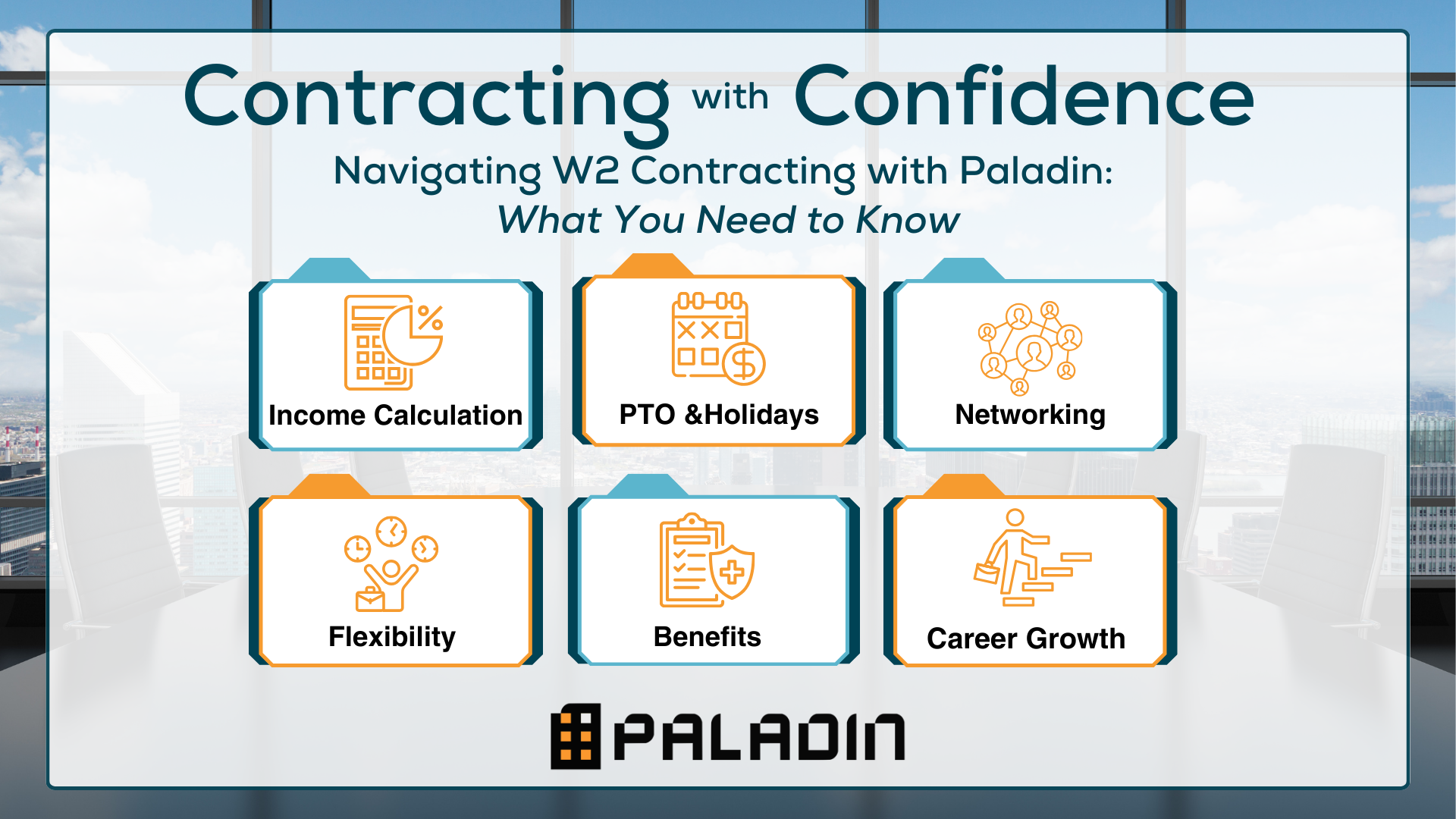
Contracting with Confidence Understanding Your Pay as a W2 Contractor with Paladin
W2 contracting offers flexibility, competitive pay, and exposure to leading enterprise environments, but understanding how compensation, benefits, and time off work is critical before making the transition. This guide breaks down what professionals should expect when contracting through Paladin.

Enterprise Delivery Isn’t Just Technical. It’s Behavioral.
Technical expertise may open the door, but behavioral intelligence is often what determines enterprise project success. Communication, adaptability, and the ability to navigate complexity under pressure are critical traits that help consultants protect delivery and strengthen long-term project outcomes.

Employer Branding: How to Craft a Message That Attracts Top Talent
A strong employer brand helps organizations attract and retain top talent by clearly communicating culture, values, and employee experience. From authentic storytelling to social media engagement, effective employer branding builds trust with candidates before the interview process even begins.
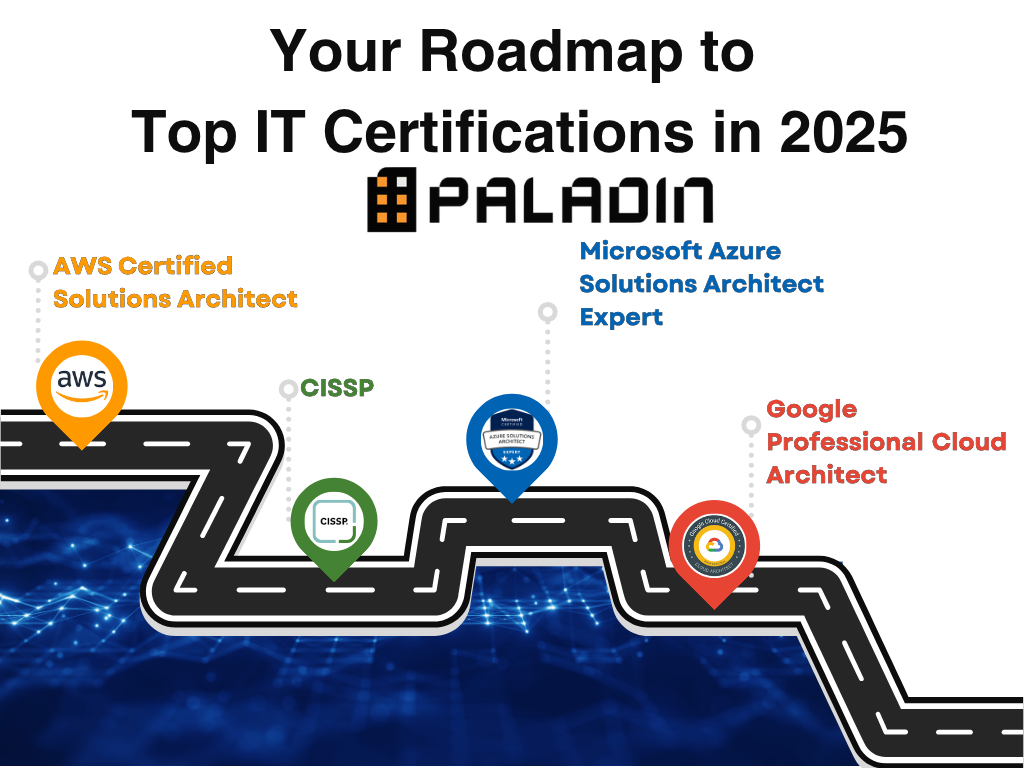
Boost Your IT Career with the Top Certifications for 2025
Top IT certifications in cloud computing, cybersecurity, and data analytics continue to shape hiring demand in 2025. Certifications like AWS, CISSP, Azure, and Google Cloud help professionals validate in-demand skills, strengthen career mobility, and stand out in an increasingly competitive technology market.

Questions to Ask When Starting a New Job
Starting a new role successfully requires more than onboarding alone. Asking thoughtful questions about expectations, communication styles, feedback processes, and team priorities can help new employees ramp faster, build stronger relationships, and navigate workplace transitions with greater confidence.

Keys to Making a Great First Impression
Strong first impressions can influence interviews, workplace relationships, and long-term professional opportunities. Preparation, authentic communication, and confident body language all play a critical role in helping professionals build trust and establish credibility from the very first interaction.

Top Soft Skills Hiring Managers Look For
Technical qualifications may open the door, but soft skills often determine long-term career success. Communication, time management, and problem-solving abilities help professionals collaborate effectively, adapt under pressure, and stand out in increasingly competitive workplace environments.

Preparing for an IT Interview
Strong IT interview preparation goes beyond reviewing your resume. From discussing technical skills confidently to navigating coding assessments and defining your ideal work environment, preparation helps candidates communicate their value clearly and stand out in competitive hiring processes.
Stay Updated
Subscribe to our newsletter for the latest industry insights and career tips